Survive theblood moon

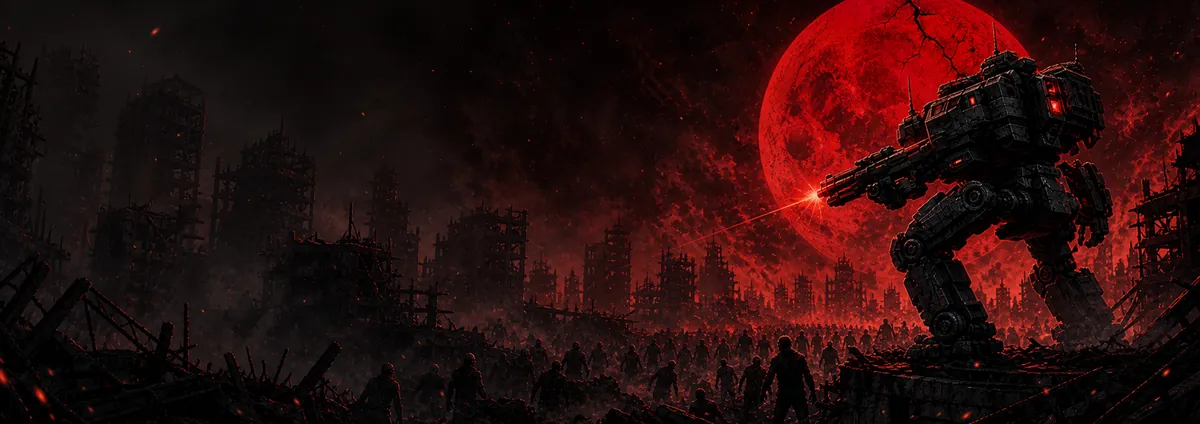
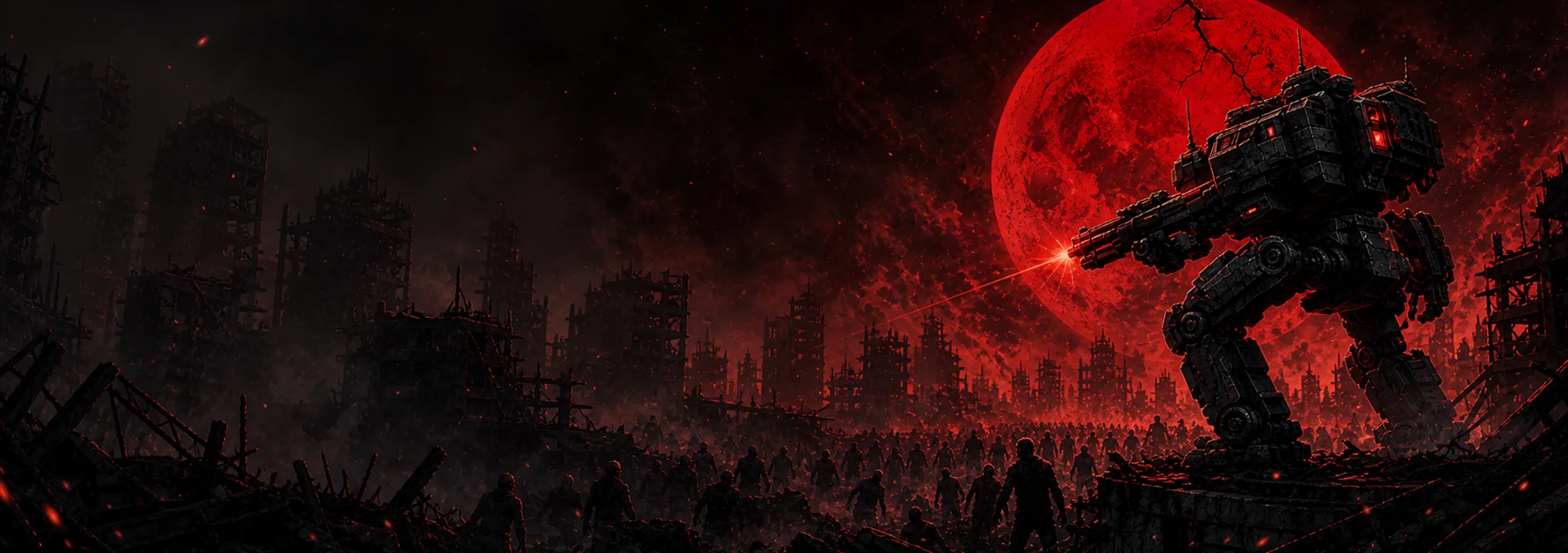
A hardcore zombie survival network on Minecraft Java. Every seventh night the sky turns red and the horde comes looking for you. It will dig, climb and collapse your walls to get in.

play.landead.net
Join Discord

Java Edition 26.2 No mods required closed alpha

26.2
Minecraft Java
7
Nights per blood moon
0
Vanilla items in the loop
0
Pay-to-win, ever

The world

Nothing here is vanilla

LANDEAD doesn't reskin Minecraft. It replaces the game inside it. Our own world generator, our own items, our own enemies. What you know about surviving the night does not apply.

A horde of walkers under a red moon

Blood moon

Every seventh night, they come for you

The sky turns red, the sun refuses to help, and the walkers stop wandering. They know roughly where you are, and every shot you fire, every door you slam, every pane of glass you step on tells them more.

  • Noise, not line of sight, is what gets you found
  • Walkers dig, climb, and take the shortest path, through your wall if that's shortest
  • Hordes scale to how loud and how established you are, not to the calendar
A concrete building collapsing as survivors run

Structural physics

Buildings remember gravity

Every structure in the world is load-bearing. Knock out the wrong pillar in a ruined tower and the floors above come down: on the loot, on the walkers, on you. Bases are engineering problems, not block piles.

  • Supports, spans and material strength are simulated, not faked
  • Looting a high floor means asking what's holding it up
  • Collapse is a weapon, if you're the one standing outside
An armed walker mech patrolling ruins

Salvage & firearms

Everything you fight with, you built

Guns come out of scrap and a workbench, not a crafting table recipe you already know. Calibres, magazines, armour-piercing and hollow-point loads, attachments. Ammunition is a supply line you have to keep running.

  • Pistol, rifle, shotgun and .50 BMG families with their own ammo types
  • Weapon mods and optics that change how a gun handles
  • Some ruins are guarded by things that shoot back
A lit, wired perimeter with barricades funnelling a horde into traps

Base defense

The seventh night is an engineering problem

A base isn't a box with walls. It's a route you design for them, a power grid you keep running, and the traps waiting where that route ends.

  • Generators, cabling and switches: lights and powered traps draw from a grid you built
  • Walkers take the cheapest path, so you make the cheapest path run through your killing floor
  • Every wall is load-bearing, so it still has to hold up whatever you stacked on it

All of it is crafted, broken and rebuilt in game. None of it is for sale.

Systems

The parts that keep you honest

Eight interlocking systems. None of them are cosmetic.

A world that was lived in

Our own chunk generator: ruined cities with road networks, signage, wrecks and hand-built interiors, not scattered vanilla villages.

Loot worth the risk

Containers are placed by hand inside buildings, the best ones behind locks, and some of the bodies lying in them are only pretending to be dead.

Wounds that stay

Broken legs, bleeding, dysentery, thirst. You don't heal by standing still: you splint it, bandage it, and boil the water first.

Something falls from the sky

Every few days a crate comes down on a parachute. Chat gives you rough coordinates, the landing is loud enough to bring company, and opening it is louder still.

Crews

Form a crew and your names disappear from everyone else's screen. Out there, another player is a silhouette until they decide otherwise.

Difficulty follows you

Progression is personal. Loot quality and what spawns near you track your survival, so a veteran and a newcomer share one world honestly.

Private worlds

The same game with five friends and nobody else: a world with its own seed and border, sealed off from the public shards in both directions.

Hundreds of them, no lag

Walkers aren't normal mobs. They're rendered straight to your client, so a horde costs the server a fraction of what it should. Big nights stay playable.

Behind the build

Built inside Minecraft's constraints

LANDEAD isn't a stack of plugins. Almost nothing you'll see here exists in Minecraft, which means almost all of it had to be rebuilt out of parts that were designed for something else entirely.

The whole look is a rewrite

Every weapon, magazine, workbench and chair is a custom 3D model with its own texture. There's no asset store for a game that doesn't exist, so we generate them from code. That's the only way hundreds of models stay consistent with each other, and the only way a change to one of them reaches every copy already sitting in someone's backpack.

A closed list of blocks to hide in

Minecraft's block registry is fixed. You can't add to it, only re-dress what's there. So every new object has to ride on an existing block whose collision, lighting and rendering behaviour happen to fit. Pick the wrong one and a hydrant quietly deletes the pavement it's standing on. Choosing the carrier is half the work of adding anything to the world.

Old mechanics, new jobs

The hordes are drawn straight to your client, so they cost the server almost nothing. The interface is painted with characters from a font. Furniture is made of display entities. Every system here is a stock Minecraft feature pushed somewhere it was never meant to go, and getting those combinations to hold together is most of what this project actually is.

That is the difference between a server that installs plugins and a game rebuilt inside another one.

Getting in

Three steps to your first night

LANDEAD is in closed alpha: the network is whitelisted while we break things on purpose. Getting on the list takes about a minute.

Join the Discord

That's where the whitelist, patch notes and the people you'll be surviving with live. Say hello in the intro channel.

Open Discord

Link your account

Run /discord in the lobby and paste the token the bot gives you. Linking is what puts your name on the whitelist. One command, done once.

Add the server

Vanilla Java Edition 26.2, no mods, no launcher profiles. Accept the resource pack when you connect: it carries our weapons, furniture and UI.

play.landead.net

Already linked your account?

Your account page shows whether you're through the whitelist, which Minecraft name is tied to your Discord, and when it was linked.

Open your account

FAQ

Reasonable questions

Do I need mods or a custom launcher?
No. A stock Java Edition 26.2 client is all you need. Everything custom (weapon models, furniture, the whole interface) arrives in a resource pack the server hands you when you connect.
Is this pay-to-win?
There is nothing to buy: no shop, no ranks, no crates, and none of that is planned for the alpha. When money eventually enters the picture it will pay for hardware and cosmetics, never for an advantage: no loot, no gear, no currency, no XP, no progression, no boosts. That's a design rule, not a slogan. A survival server where the seventh night can be bought off isn't worth running.
Can I play with my friends?
Yes. Form a crew on the public shard and your names vanish from everyone else's screen. Private worlds (same game, own seed, own border, nobody else) are built and coming once the public shard is stable.
What happens to my base while I'm offline?
The world keeps existing, so build like it does. You can claim your plot, structures take real damage, and anything you leave outside the walls is a gift to whoever walks past.
Is the server open yet?
We're in closed alpha with a whitelist. Link your Discord to get on it. That also gets you the patch notes and a direct line to the developers, which during testing is very much the point.
Where is the server hosted?
Europe for now. A North American shard follows once the population justifies it, because we'd rather run one busy world than two empty ones.

The seventh night is coming
whether you're ready or not

Get whitelisted, build something that stands up.

Join the Discord